
In this guide
In short
Plan meals by checking your calendar first, choosing food that fits each evening, and turning the missing ingredients into one shopping list. A useful meal plan includes the work around dinner: shopping, preparation, cooking, and clearing up.
- Mark busy evenings and meals away from home.
- Check usable ingredients and quantities.
- Choose meals that fit the available preparation time.
By the end of this tutorial, you will have a seven-day dinner plan, a shopping list, and a fallback for the evening that changes unexpectedly.
Start with the week you actually have
Imagine two adults planning their dinners on Sunday. Tuesday includes a late meeting, Thursday is busy, and Friday is dinner with friends. They have more time on Monday and Saturday.
Their first decision is to plan five cooking occasions, one leftover dinner, and one meal away from home. They do not need seven new recipes.
Write down your own constraints before choosing food. Include travel and cleanup when estimating available time. The cooking times below are planning estimates for familiar meals, not tested recipe timings.
Check what is already available
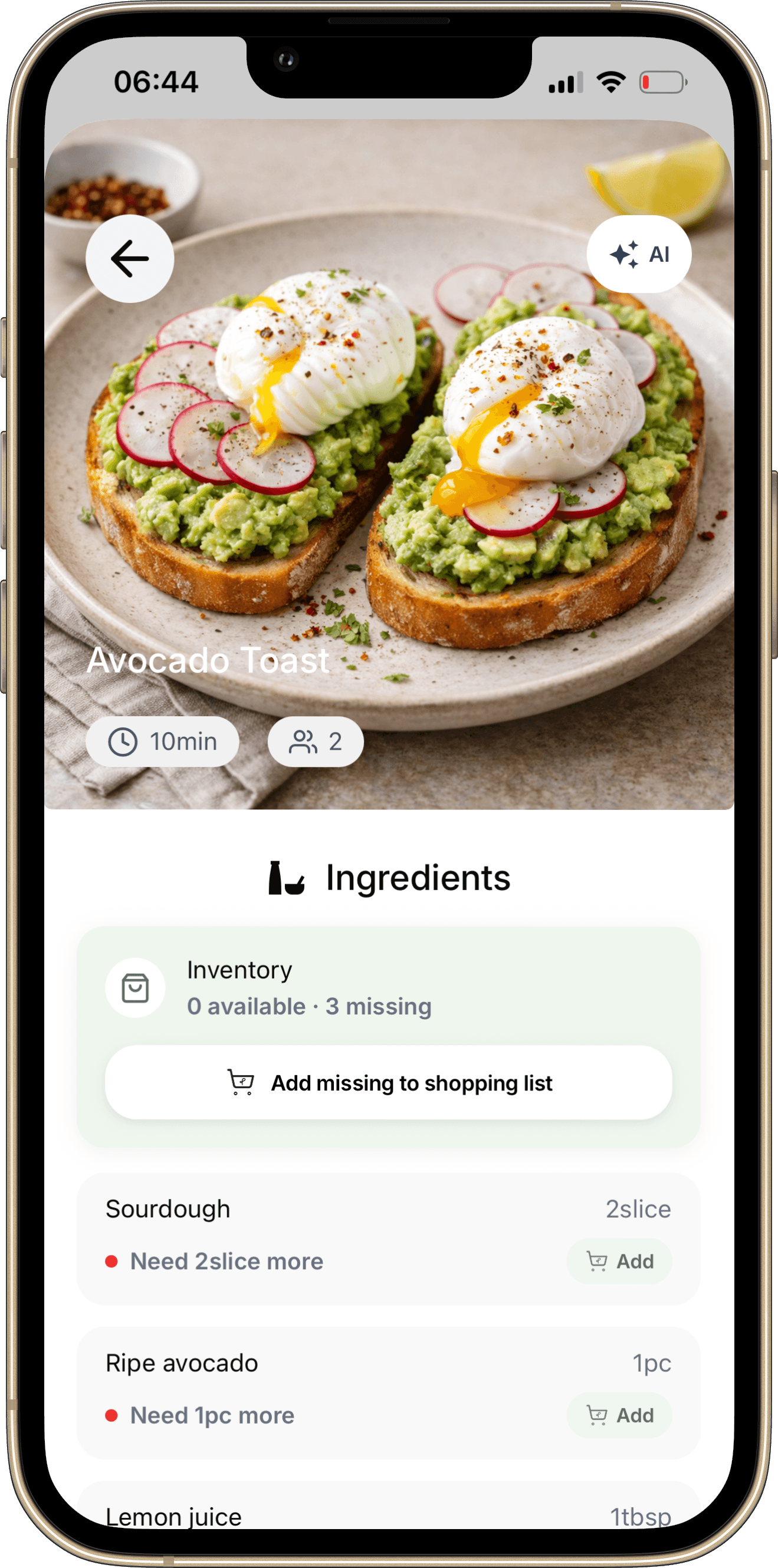
Look through the fridge, freezer, and cupboard. Check usable quantities and dates, rather than recording only that an ingredient exists.
In this example, the household has 300 g pasta, 250 g couscous, two cans of chickpeas, one can of tomatoes, 200 g red lentils, six eggs, 500 g frozen vegetables, and enough oil and seasoning for the week.
Choose meals that share ingredients without requiring the same dinner every night. Peppers and onions can work in a tray bake, pasta, and a frittata. Keep breakfast, lunch, snacks, and household supplies on a separate part of the shopping list; this example covers dinners only.
Match each dinner to the day's capacity
| Day | Constraint | Dinner for two | Planning allowance | Preparation decision |
|---|---|---|---|---|
| Monday | Quieter evening | Four-portion chickpea and vegetable tray bake | 45 minutes plus cleanup | Reserve two portions for Tuesday |
| Tuesday | Late meeting | Monday's reserved tray bake with couscous | 15 minutes plus cleanup | No new recipe |
| Wednesday | Ordinary workday | Tomato and pepper pasta | 25 minutes plus cleanup | Use ingredients from the main shop |
| Thursday | Limited time | Eggs on toast with salad | 15 minutes plus cleanup | Keep preparation simple |
| Friday | Dinner with friends | Meal away from home | No home cooking | Include the expected cost in the weekly spending check |
| Saturday | More time | Lentil and vegetable soup with bread | 40 minutes plus cleanup | Make two dinner portions |
| Sunday | Weekly review evening | Vegetable frittata with salad | 25 minutes plus cleanup | Check next week's supplies afterward |
This is an illustrative menu, not a nutritional prescription. Adjust portions and ingredients for appetite, dietary needs, allergies, and the recipes you use.
Plan storage as well as portions. The UK Food Standards Agency advises refrigerating properly cooled leftovers within two hours and eating them within 48 hours, or freezing them. Reheat only once and until steaming hot throughout. Follow food-specific and packaging instructions where they differ. Food Standards Agency: cooking and leftovers
Build the shopping list from quantities
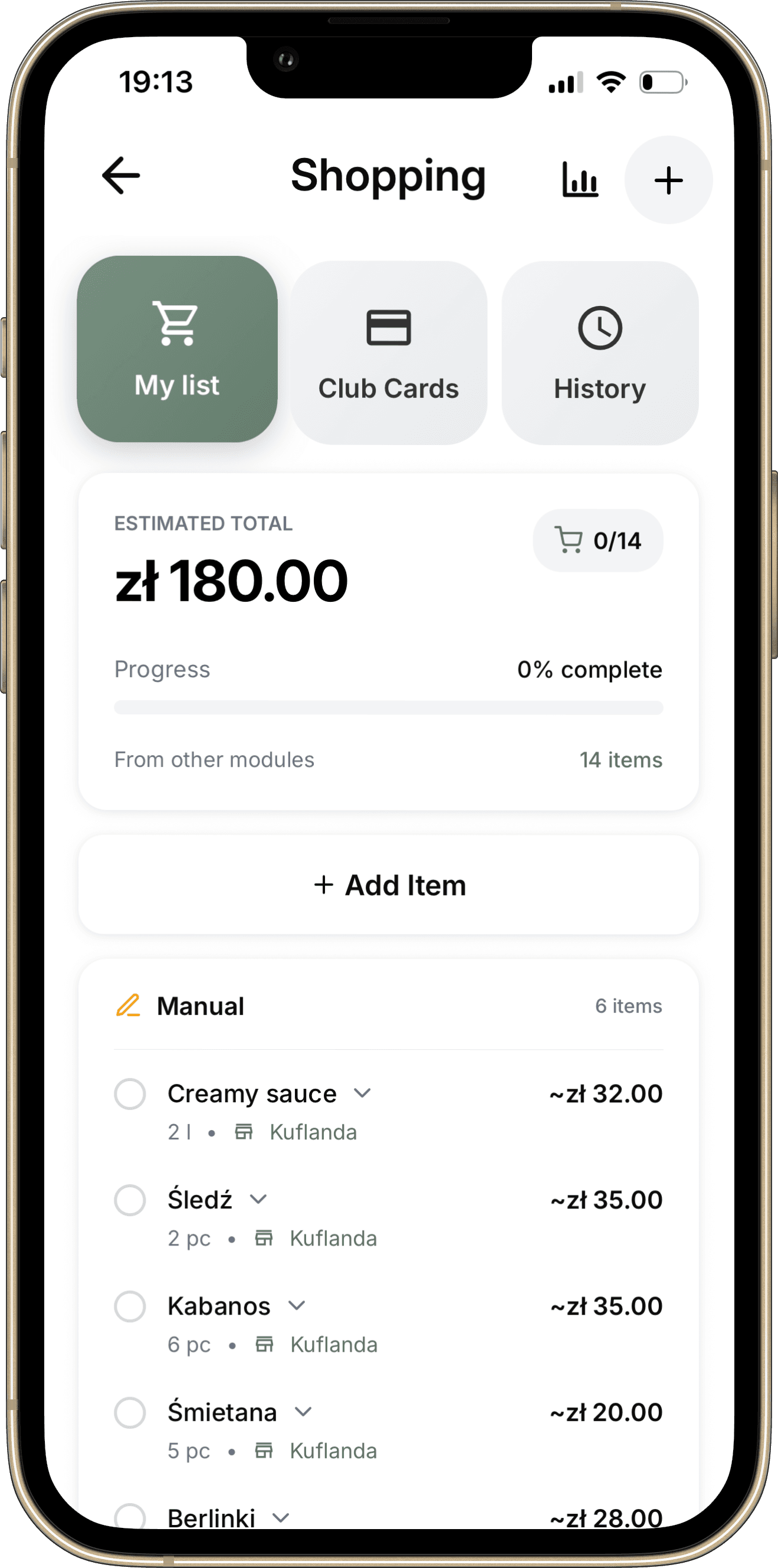
The example household allocates four eggs to Thursday and four to Sunday. Six are available, so two more are needed. That small calculation is more useful than adding another full carton automatically.
| Ingredient | Planned total for these dinners | Usable amount at home | Buy |
|---|---|---|---|
| Chickpeas | 2 cans | 2 cans | None |
| Pasta | 200 g | 300 g | None |
| Couscous | 150 g | 250 g | None |
| Canned tomatoes | 2 cans | 1 can | 1 can |
| Red lentils | 200 g | 200 g | None |
| Eggs | 8 | 6 | At least 2, allowing for pack sizes |
| Frozen vegetables | 500 g | 500 g | None |
| Peppers | 4 | None | 4 |
| Onions | 3 | None | 3 |
| Carrots | 3 | None | 3 |
| Potatoes | 500 g | None | 500 g |
| Salad leaves | 2 small bags | None | 2, checking use-by dates |
| Bread | 1 small loaf | None | 1, freezing portions if needed |
These quantities illustrate shopping arithmetic. Check them against your chosen recipes before buying. If a pack is larger than the required amount, decide how the rest will be used or stored.
Give shopping and preparation a place in the calendar
Schedule the main shop before Monday's cooking. Add a reminder to check the fridge before leaving. If Sunday's salad will not keep safely from the main shop, arrange a smaller later purchase or choose a suitable alternative.
Keep one simple fallback using available ingredients, such as pasta with frozen vegetables. When Thursday becomes busier, the fallback should replace Thursday's meal rather than create another cooking obligation.
Use the plan in Planique
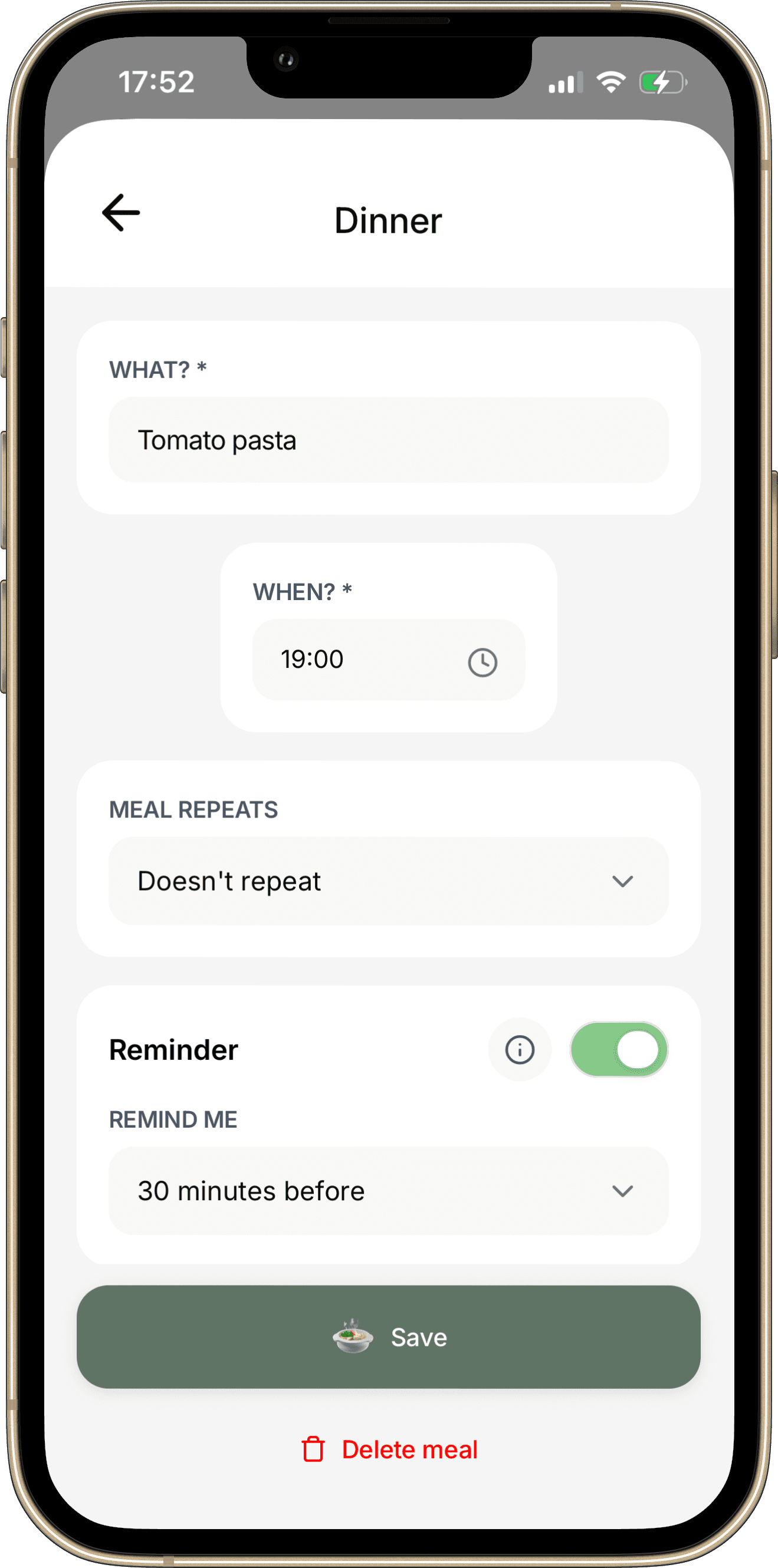
In Meal planner, use Menu to choose a day and add its breakfast, lunch, or dinner. Add the meal name, time, and preparation notes. If you select an available recipe suggestion, the meal can retain its recipe link.
Review the scheduled meals alongside other activities in Calendar. Put the shopping trip and any preparation block into the plan separately. Choosing a dinner does not remove the time needed to shop and cook it.
Your meal-planning checklist
- Mark busy evenings and meals away from home.
- Check usable ingredients and quantities.
- Choose meals that fit the available preparation time.
- Assign reserved portions to a specific meal and safe storage plan.
- Subtract existing supplies from recipe quantities.
- Schedule shopping before the first meal that needs it.
- Keep one realistic fallback.
Common questions
Do I need to plan every meal?
Start with the meal that causes the most daily decisions. If that is dinner, plan dinner first and add breakfast or lunch only when doing so helps.
What if I change my mind about a meal?
Swap it with another suitable day, then check ingredient dates, preparation time, and reserved portions. A calendar change should trigger a quick food check.
Should I plan the cheapest possible menu?
Choose a menu you can afford and realistically prepare. Compare the shopping list with your own spending limit, including meals away from home, before finalizing it.
Continue with How to Do a Weekly Review to make meal planning part of a repeatable routine.
Make it your own
Weekly dinner plan worksheet
Use the blank worksheet to plan your own example. Print it or save it as a PDF from your browser. It is a planning document and does not import records into the app.
Open printable worksheetKeep the details with the plan.
Explore how Meal planner fits into Planique Planner's connected approach to everyday planning. Planique is in early access.