
In this guide
In short
A useful home maintenance schedule records what needs attention, why it is due, who will handle it, and what happened last time. Start with the items you actually own or are responsible for, then build the schedule from manuals, service records, and confirmed obligations.
- List the items you are responsible for.
- Confirm who will handle each next action.
- Record the instruction source before setting recurring intervals.
By the end of this tutorial, you will have a small maintenance register and a realistic plan for its next actions.
List responsibilities before choosing dates
Walk through your home and list the appliances, fixtures, and recurring jobs that need attention. If you also manage a vehicle, keep its servicing and renewals in a separate section of the same review.
For each item, establish responsibility. A renter may need to report a problem to a landlord rather than arrange a repair. In a shared home, agree who will make a booking or check the instructions. Writing a name in a plan does not assign work unless that person has agreed.
Begin with five important items. A short register that gets reviewed is easier to maintain than an exhaustive list with no reliable dates.
Find the source of each interval
Avoid copying a universal maintenance calendar and treating every interval as correct for your home. Requirements vary by model, usage, climate, service agreement, and local rules.
Record the instruction source next to the item. That might be a manufacturer's manual, a dated service report, a lease, or an appointment confirmation. If you cannot verify when a job is due, the next action is to find that information.
For example, "Find the extractor model and read its filter instructions" is an actionable task. "Replace all filters monthly" may create unnecessary work or the wrong maintenance routine.
Separate the deadline from the work needed beforehand
Some maintenance has a fixed deadline. Other work is based on elapsed time, usage, or a condition that needs checking.
A service appointment might require finding a provider, requesting a quote, ordering a part, and keeping the appointment itself. Give these preparation tasks enough time. A reminder on the final due date is often too late to arrange everything.
The following is a fictional planning example. Its dates are chosen for the scenario, not recommended maintenance intervals.
| Item | What is known | Next action | Planning date | Evidence to keep |
|---|---|---|---|---|
| Kitchen extractor | Filter instructions have not been checked | Find model number and read the manual | Saturday, 7 November | Manual reference and filter details |
| Washing machine | Previous service recorded; next requirement unclear | Review service report and model guidance | Sunday, 8 November | Last service date and provider notes |
| Car | Service booked for 18 November | Confirm drop-off arrangements and estimate | Monday, 9 November | Booking, mileage, estimate, final invoice |
| Rental property repair | Landlord has agreed to arrange a contractor | Ask for the appointment window | Tuesday, 10 November | Confirmation and access arrangements |
The register can include an unknown date. It should make the uncertainty visible and give it a next action.
Keep a useful history
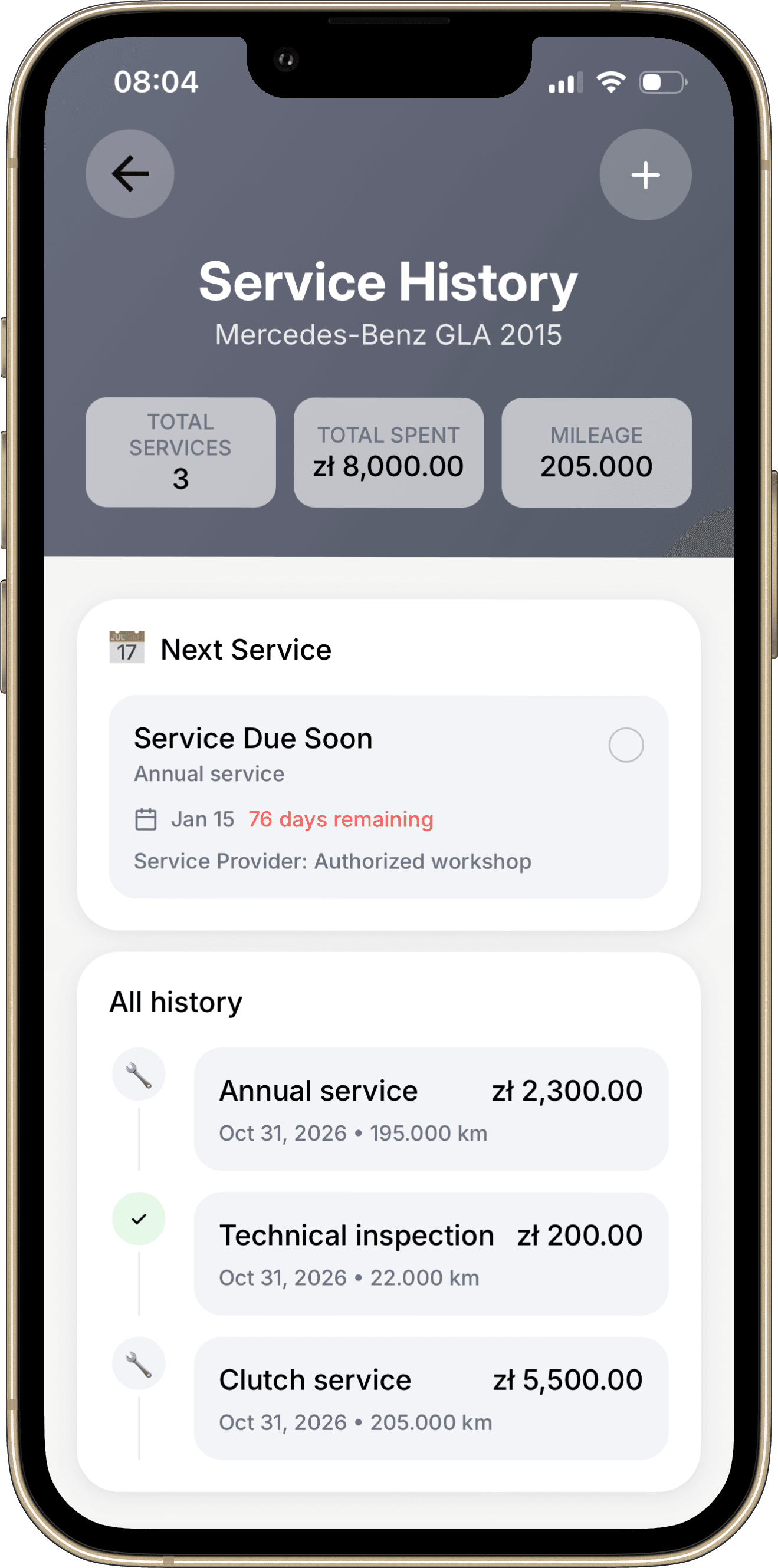
After a job is completed, record the date, what was done, who did it, the actual cost, and any relevant observations. Preserve the old record when adding the next action.
For the fictional vehicle service, an entry might read: "18 November; scheduled service completed; provider invoice stored with vehicle records; actual cost €210; next due information copied from the service report."
The €210 is an example amount. The useful part is the distinction between an estimate before the appointment and the actual cost afterward.
For work with safety implications or specialist requirements, use the qualified provider or responsible party indicated by the relevant instructions. Your planning record should help arrange the work, not substitute for technical directions.
Fit maintenance into the rest of the week
Choose a manageable amount of maintenance for each week. Include travel, waiting time, purchases, and access arrangements when estimating effort.
If Saturday already contains a large shop and a family visit, reviewing one manual may be a better commitment than starting several jobs. Use your weekly review to bring upcoming work into view before it becomes urgent.
If a part has not arrived, move the dependent job and keep the ordering task visible. Repeatedly rescheduling only the final job hides the real blocker.
Use the plan in Planique
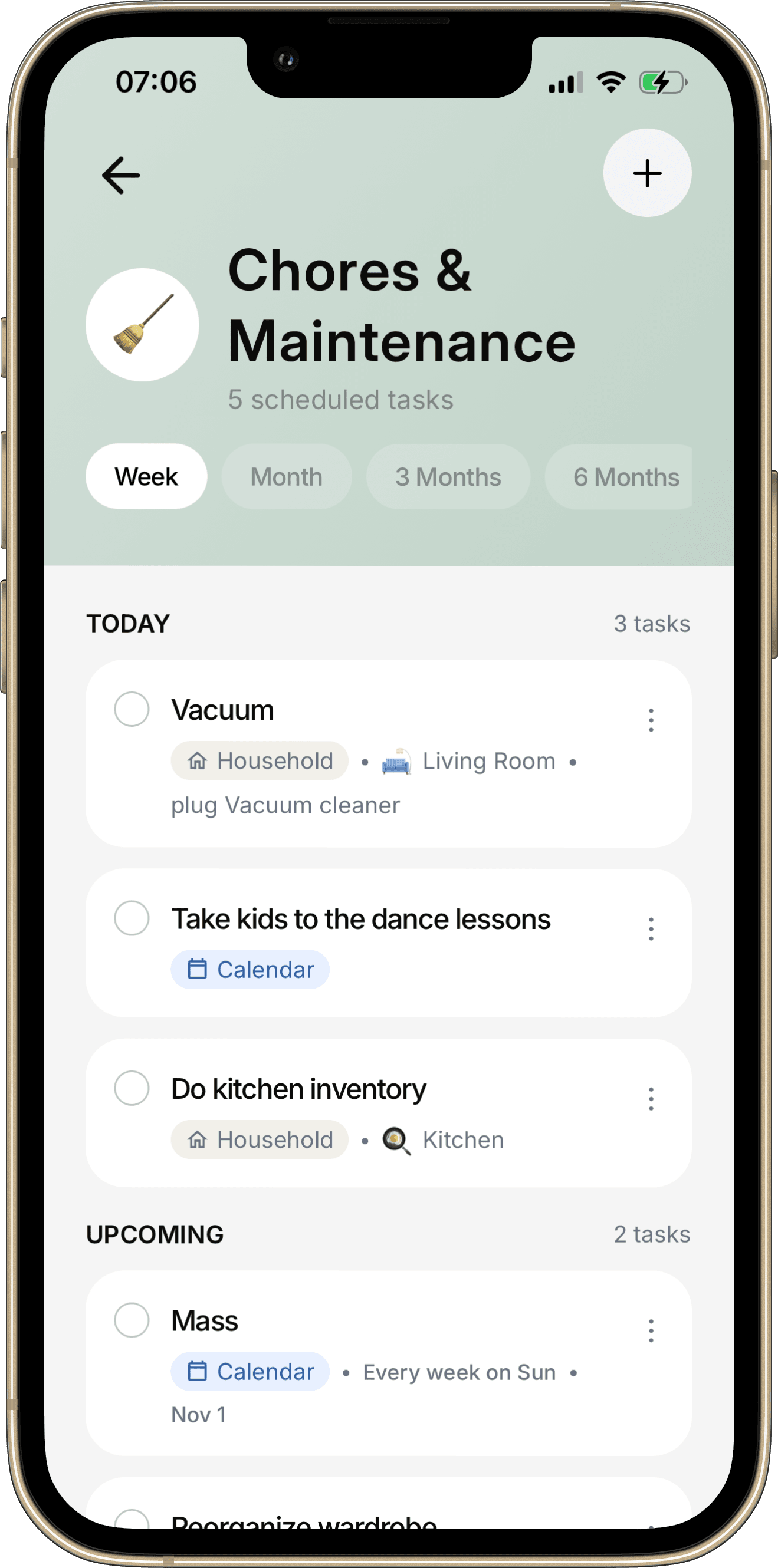
Use Household's Chores & Maintenance area for scheduled household work. A household task can include a room, an optional appliance connection, a date, times, notes, and recurrence settings.
Keep the instruction source or preparation details in the task notes. Use the relevant appliance or vehicle area when the responsibility belongs to a specific item. Check the scheduled activity in Calendar against your other commitments.
Your maintenance checklist
- List the items you are responsible for.
- Confirm who will handle each next action.
- Record the instruction source before setting recurring intervals.
- Separate preparation, appointments, and deadlines.
- Keep estimated costs distinct from actual costs.
- Record completed work before planning the next occurrence.
- Review upcoming work during the weekly review.
Common questions
What if I do not know when something was last serviced?
Record "unknown" and look for a receipt, service record, or advice from the appropriate provider. Do not invent a date to make the tracker look complete.
Should every job repeat automatically?
Use recurrence when the schedule is known and appropriate. Condition-based or usage-based work may need a review task instead of a fixed repeating replacement date.
How much should I set aside for maintenance?
Start with known quotes and past records. Keep unknown estimates visible and revise them when you have better information; there is no universal amount that fits every home.
Continue with How to Organize Bills, Subscriptions, and Annual Renewals for the financial commitments around your home.
Make it your own
Home maintenance register worksheet
Use the blank worksheet to plan your own example. Print it or save it as a PDF from your browser. It is a planning document and does not import records into the app.
Open printable worksheetKeep the details with the plan.
Explore how Household fits into Planique Planner's connected approach to everyday planning. Planique is in early access.